

Achieving meaningful muscle growth often demands more than repeating the same conventional lifts. Incorporating uncommon movements that target muscles through novel angles and extended ranges of motion can produce superior hypertrophic responses.
Pistol squats, for example, isolate one leg while extending the other forward, simultaneously testing balance and unilateral strength without a supporting leg. Belt squats eliminate spinal loading entirely by isolating the lower body, allowing lifters to maximize quad engagement while protecting the back. Nordic curls require kneeling with secured feet and controlling the torso descent using hamstring strength alone, making them exceptionally demanding and injury-preventive when executed correctly.
Unilateral movements like pistol squats and Nordic curls challenge strength, balance, and hamstring control beyond conventional training.
For advanced quadriceps development, sissy squats keep the hips extended while bending the knees forward, creating an intense stretch through a motion unavailable in standard squat variations. Cambered bar incline presses replace conventional incline presses to activate more upper chest fibers through increased range of motion.

Forward-leaning seated rows extend that same principle to back training, creating a deeper stretch in the back muscles before initiating the pull, which enhances overall muscle recruitment throughout the movement.
Upper body development benefits considerably from grip and positioning variations. The reverse grip bench press uses a supinated grip with palms facing the lifter to target the lower portion of the upper chest in a manner distinct from traditional pressing. The JM Press serves as a more efficient triceps-specific movement compared to standard pressing variations.
Prone Y raises target the posterior deltoids and upper back through arm positioning that mimics the letter Y, addressing muscles often underdeveloped by conventional pressing and rowing alone. Single-arm push-ups remove the assistance of the non-working arm, demanding considerable core stability and producing pronounced unilateral upper body strength adaptations.
Core and stability training also benefit from unconventional approaches. The bear crawl hold requires maintaining hands under the shoulders with knees just one inch above the ground, demanding sustained core tension and hip control.
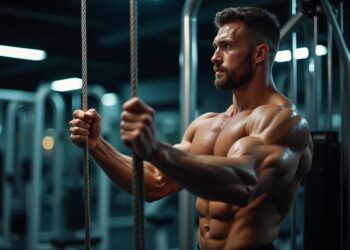
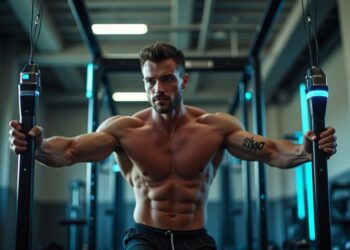
Slideboard push-up marches involve dragging legs behind while keeping arms straight, engaging the core through an anti-extension challenge. Cable crossover pulls require simultaneously pushing and pulling handles while keeping the torso completely still, effectively isolating shoulder stability rather than relying on momentum.
The Zercher Cossack Cross Twist combines a lateral squat with rotational torso movement, challenging dynamic stability across multiple planes simultaneously.
Pulling movements can also be refined for greater muscular effect. Cable flexion rows adjust the cable to a low position, pulling the handle toward the torso to achieve a specific back contraction not replicated by standard row variations.
Lying bicep curls provide superior isolation compared to upright variations by removing postural compensation. Progressive overload remains a foundational principle for ensuring these unconventional movements continue to drive measurable strength and size gains over time. Together, these exercises represent a deliberate departure from conventional training, offering targeted stimuli that push muscles into new growth territories through mechanical and positional novelty.