



To maximize your chest training, focus on muscle activation by selecting exercises like the barbell bench press for better pectoralis major engagement. Incorporate varied grips to hit different muscle groups effectively. Improve your strength through consistent resistance training and prioritize joint safety with controlled movements. Use a mix of compound and isolation exercises, aiming for 2-3 chest workouts weekly. These strategies can enhance your growth, and there’s more to explore that’ll take your training even further.
Key Takeaways
- Focus on barbell bench press for optimal pectoralis major activation while ensuring proper grip width to engage desired muscle groups effectively.
- Incorporate a variety of exercises, including both compound and isolation movements, to maximize muscle stimulation and growth.
- Utilize periodization in your training program, gradually increasing load and adjusting rep ranges for continued strength gains.
- Maintain joint safety by emphasizing stabilization techniques and controlled movements during chest exercises to prevent injuries.
- Train chest twice a week, including horizontal and incline pressing, to target all areas of the chest for balanced development.
Understanding Muscle Activation for Optimal Chest Growth

When it comes to enhancing chest growth, understanding how different exercises activate your muscles is essential.

You’ll find that muscle activation varies considerably across exercise variations. For instance, the barbell bench press (BBP) generally enhances activation in the pectoralis major, anterior deltoid, and triceps brachii more than dumbbell flies, especially when lifting heavier loads.
Adjusting your grip width can also make a difference; a narrow grip increases triceps engagement, reducing emphasis on the chest. Meanwhile, wider grips during horizontal presses target the sternal and costal portions of the pectoralis major more effectively.
The Importance of Resistance Training and Strength Gains

Understanding how to activate your chest muscles effectively sets the stage for recognizing the importance of resistance training in achieving strength gains.
Engaging in resistance training offers significant benefits, including improved muscle activation in key upper body muscles like the pectoralis major and triceps brachii. Over just ten weeks, you can witness remarkable strength adaptations, regardless of whether you use a Smith machine, dumbbells, or a Swiss ball barbell. These strength gains enhance your lifting velocity and force production, directly boosting your performance in exercises like the bench press. Plus, the hypertrophy you gain contributes to greater strength, ensuring your training yields functional improvements across various related exercises. Notably, increased training frequency can lead to significant improvements in muscle mass as well. Embrace resistance training to unleash your full potential!
Balancing Joint Safety and Muscle Strengthening

Balancing joint safety and muscle strengthening is essential for effective chest training. To achieve this, focus on joint stabilization during exercises. For example, while bench pressing, you can activate your chest muscles with lower joint stress, promoting injury prevention. In contrast, cable crossover exercises require careful stabilization to avoid overloading your shoulders and elbows. Research shows that the barbell bench press results in the highest pectoralis major activation, making it a key exercise in your routine. Start with smaller loads and progress gradually to guarantee your stabilizing muscles remain effective throughout your workout. Incorporating varied exercises that distribute the load evenly around your upper limbs also supports joint health. Remember to use controlled movements and proper breathing techniques to reduce unnecessary stress on your joints, enhancing both safety and strength gains. Prioritizing these elements will help you build a strong, resilient chest.
Effective Programming Principles for Chest Workouts

To maximize your chest workouts, you need a well-structured programming approach that incorporates variety, frequency, and progression.
Implement periodization strategies by organizing your training into mesocycles, focusing on building base volume with moderate intensity initially. Gradually increase load while decreasing repetitions to promote strength along with hypertrophy. Aim to train your chest twice a week, managing volume effectively by incorporating a mix of rep ranges, from 6-15 for hypertrophy to higher reps for isolation. Remember to include horizontal pressing and incline work to target all areas of the chest effectively.
Utilize drop sets or supersets to boost training density without excessive volume. Regularly reassess your training variables, ensuring progressive overload while maintaining joint safety.
This balanced approach will ultimately enhance your chest development and prevent stagnation.
Choosing the Right Compound Exercises for Hypertrophy
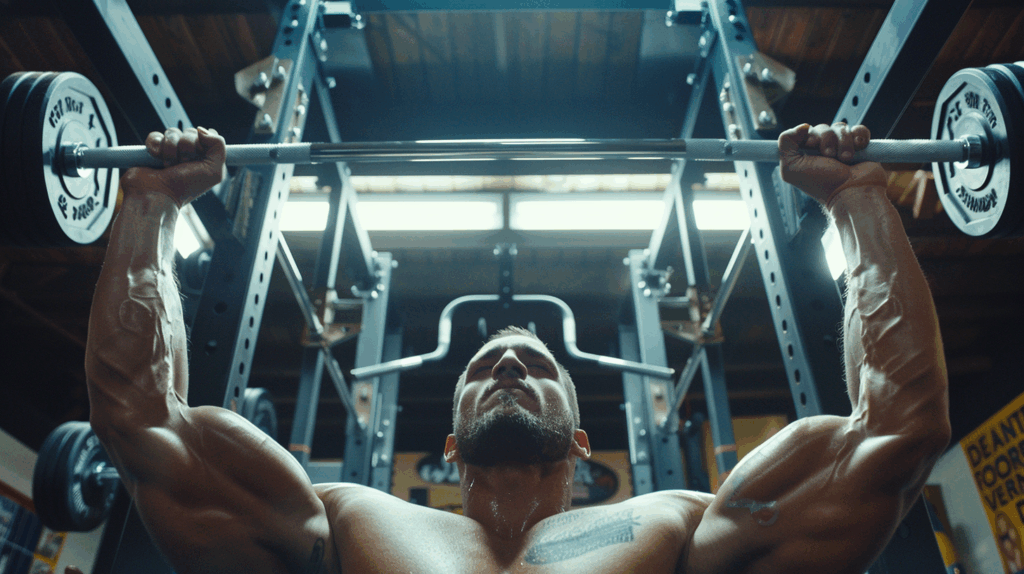
When you’re aiming for hypertrophy, choosing the right compound exercises is essential for ideal chest development. Prioritize bench presses, incline presses, and dips to target different muscle heads effectively. Incorporating exercise variations like push-ups and dumbbell pullovers can add diversity to your routine. To maximize results, aim for a training frequency of twice per week to optimize muscle growth and recovery.
| Exercise | Focus Area | Equipment Selection |
|---|---|---|
| Bench Press | Overall Chest | Barbell/Dumbbells |
| Incline Press | Upper Chest | Barbell/Dumbbells/Machine |
| Chest Dips | Lower Chest | Bodyweight/Weighted |
Practical Considerations for Exercise Selection and Progression
While focusing on hypertrophy, it’s essential to take into account both exercise selection and progression methods.
Start with motor control exercises to guarantee efficient chest muscle engagement before adding heavier loads. Aim for 2-3 chest exercises per workout, training 2-3 times a week for peak volume. Adjust your training frequency based on your experience—beginners may need more frequent sessions compared to advanced trainees.
Incorporate exercise variety by mixing compound and isolation movements to stimulate all areas of your chest. Gradually increase weights while maintaining form, and manipulate repetition ranges for varied stimulus. This approach helps create an anabolic environment that is crucial for muscle growth.
Remember to prioritize movement quality over mechanical fatigue, using controlled tempos to enhance muscle control and reduce injury risk.