

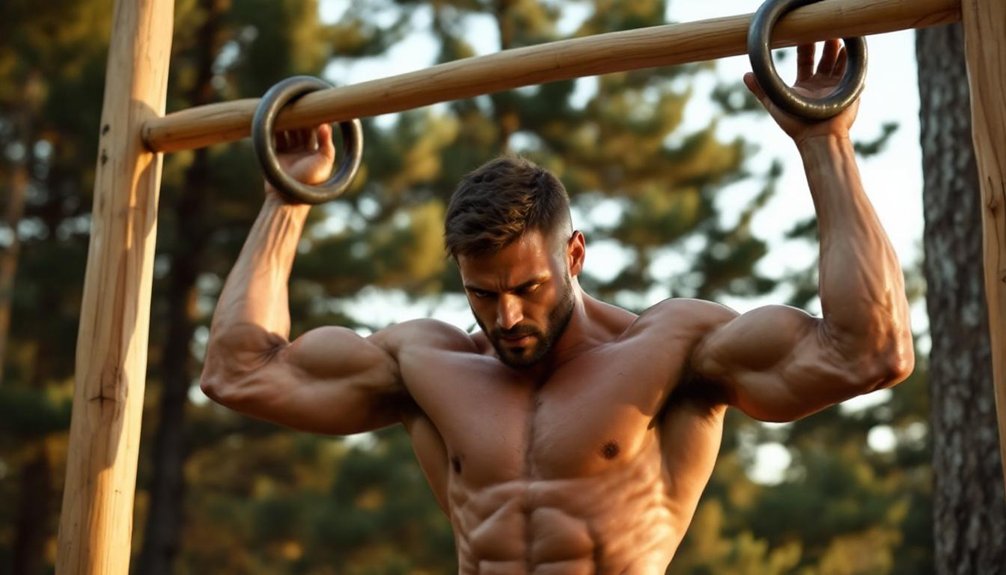
For natural arm muscle growth without equipment, focus on push-up variations (diamond, decline, and pseudo-planche), tricep dips using household objects, and chin-ups for biceps development. Proper form maximizes effectiveness while minimizing injury risk. Include isometric holds like planks and half-curl positions to build endurance and strength. Consistent training with progressive overload principles guarantees continued development. The following exercises offer remarkable potential for substantial arm development without expensive gym memberships.

Many fitness enthusiasts believe that building impressive arm muscles requires heavy weights and gym equipment. However, this common misconception overlooks the remarkable potential of bodyweight exercises for developing substantial arm strength and definition. Properly executed bodyweight movements can effectively target the biceps, triceps, and forearms while requiring minimal space and zero equipment investment.

Push-ups stand as the quintessential bodyweight exercise for arm development, particularly for the triceps. Standard push-ups engage the chest and shoulders, but variations like diamond push-ups (where hands form a diamond shape beneath the sternum) intensify triceps activation. For those seeking greater challenge, decline push-ups with feet elevated increase the resistance, while pseudo-planche push-ups lean the body forward to place greater demands on the entire arm musculature.
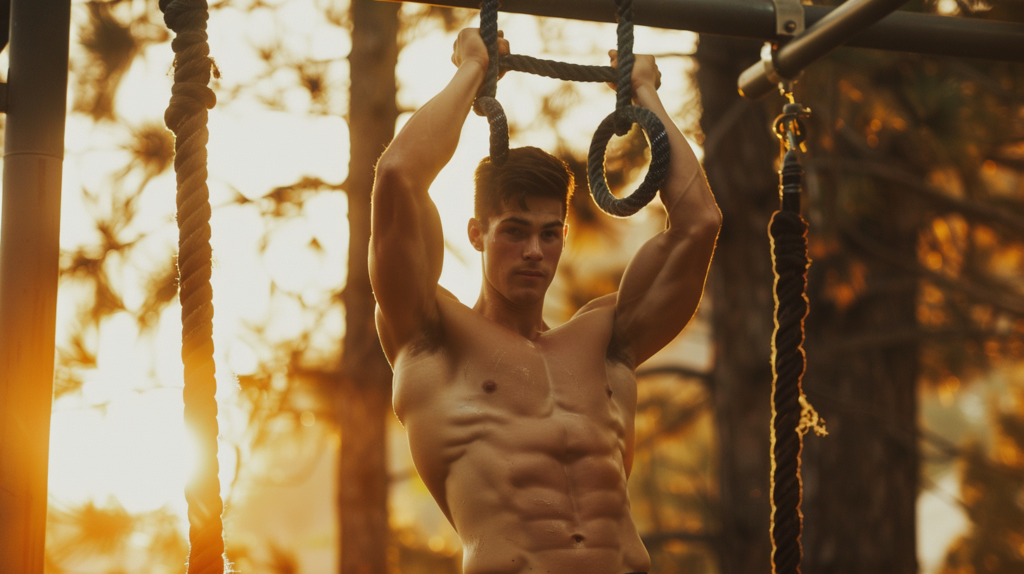
The often-overlooked tricep dip delivers exceptional triceps growth when performed correctly. Using parallel bars, a sturdy chair, or even the edge of a bathtub, practitioners lower their body by bending at the elbows before pushing back to the starting position. Maintaining proper form with shoulders depressed and elbows tracking backward maximizes effectiveness while minimizing shoulder strain.
For biceps development, pull-ups and chin-ups reign supreme. While pull-ups (palms facing away) emphasize back muscles, chin-ups (palms facing toward you) considerably engage the biceps. Those unable to perform full chin-ups can begin with negative repetitions, jumping to the top position and lowering slowly to build necessary strength.
Isometric holds also contribute considerably to arm development. The plank position, particularly when performed on straight arms rather than forearms, creates intense isometric contraction throughout the triceps. Similarly, maintaining a half-curl position during chin-up attempts builds biceps endurance and strength.
Consistency ultimately determines success with bodyweight arm training. Progressive overload principles still apply, requiring practitioners to increase repetitions, adjust leverage, or add controlled tempo to exercises as they advance.
Frequently Asked Questions
How Long Should I Rest Between Bodyweight Arm Exercise Sets?
Rest periods of 60-90 seconds are typically recommended between bodyweight arm exercise sets.
For hypertrophy-focused training, shorter rest periods (30-60 seconds) may enhance muscle growth through metabolic stress.
When training for strength, longer rests (2-3 minutes) allow for better performance.
Individuals should adjust based on their fitness level and training goals, potentially extending rest times if exercise quality diminishes during sets.
Can Beginners Build Significant Arm Muscle With Bodyweight Exercises Alone?
Yes, beginners can build significant arm muscle with bodyweight exercises alone.
Novice trainees experience rapid neurological adaptations and muscle growth during their first 3-6 months of training.
Exercises like push-ups, pull-ups, and dips effectively target the biceps, triceps, and shoulders.
Progressive overload through increased repetitions, decreased leverage, or adding isometric holds guarantees continued development before weight training becomes necessary for advanced gains.
How Often Should I Change My Bodyweight Arm Workout Routine?
Beginners should change their bodyweight arm routine every 4-6 weeks to prevent plateaus and adaptation.
However, making changes too frequently prevents progressive overload. Effective adjustments include varying rep ranges, changing exercise order, modifying rest periods, or incorporating new exercise variations.
Some consistency is necessary for tracking progress.
More advanced trainees may benefit from more frequent program modifications as their bodies adapt quicker.
Are Bands Necessary to Maximize Results From Bodyweight Arm Exercises?
Resistance bands aren’t necessary but can greatly enhance bodyweight arm training by adding variable resistance and increasing tension throughout movements.
They allow for progressive overload when traditional bodyweight exercises become too easy. While excellent results can be achieved without bands through proper form and exercise variations, incorporating them can help overcome plateaus and target muscles from different angles, particularly for triceps and biceps isolation work.
What’s the Ideal Rep Range for Bodyweight Arm Exercises?
The ideal rep range for bodyweight arm exercises typically falls between 8-20 repetitions per set.
Lower rep ranges (8-12) with challenging variations promote strength and hypertrophy, while higher ranges (15-20) enhance muscular endurance.
For best results, individuals should incorporate both ranges, progressively increasing difficulty as their strength improves.
Time under tension matters more than precise rep counts for bodyweight movements.