


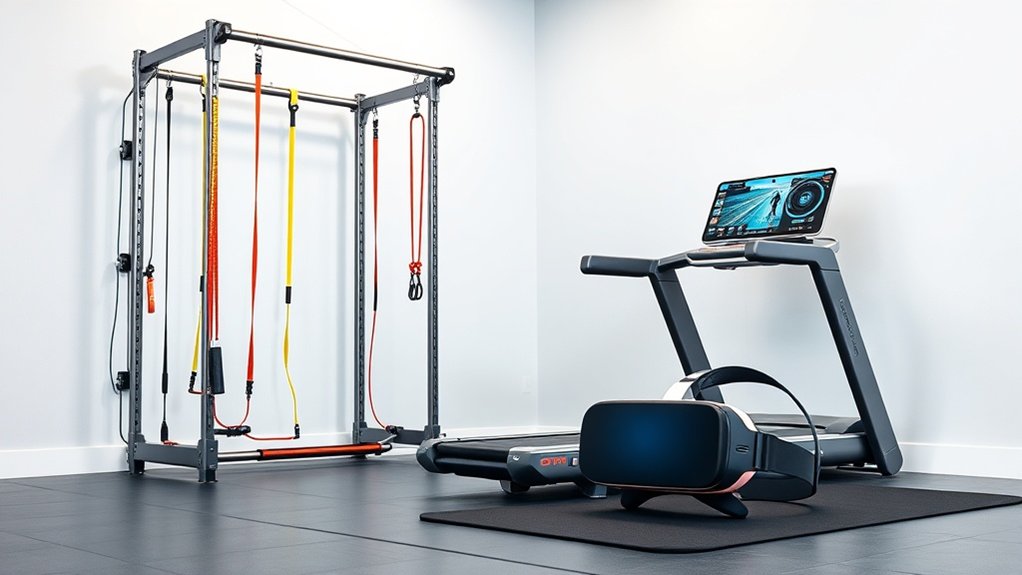
The top three innovative gym gear trends for 2025 include smart gym equipment that integrates AI and connectivity to provide real-time feedback and personalized workouts, virtual reality fitness offering immersive, engaging training with biometric tracking, and advanced wearables that monitor detailed health metrics and deliver customized coaching. These technologies enhance workout effectiveness, safety, and motivation, paving the way for highly individualized fitness experiences that are transforming how people engage with exercise. Further insights reveal how these trends reshape the future fitness landscape.
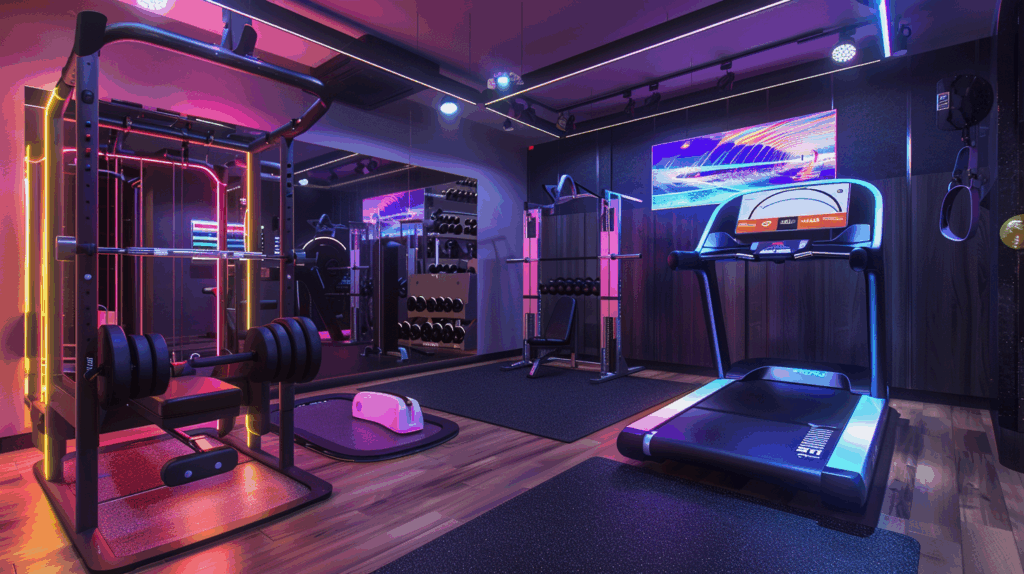
Smart Gym Equipment: Revolutionizing Workouts
The integration of smart gym equipment is fundamentally reshaping workout experiences by combining artificial intelligence, connectivity, and real-time feedback.
In 2025, gyms are increasingly deploying intelligent weight systems and connected resistance machines that provide users with instant data on form, strength, and progress, allowing more efficient and safer training.

Wearables have evolved beyond basic tracking; they now offer personalized coaching and AI-driven insights, helping users optimize every session and stay motivated.
Smart cardio machines—such as rowers and bikes—feature built-in displays for guided workouts and performance analytics.
This tech-forward approach not only attracts members seeking innovation but also enhances retention by making workouts more engaging, personalized, and results-driven.
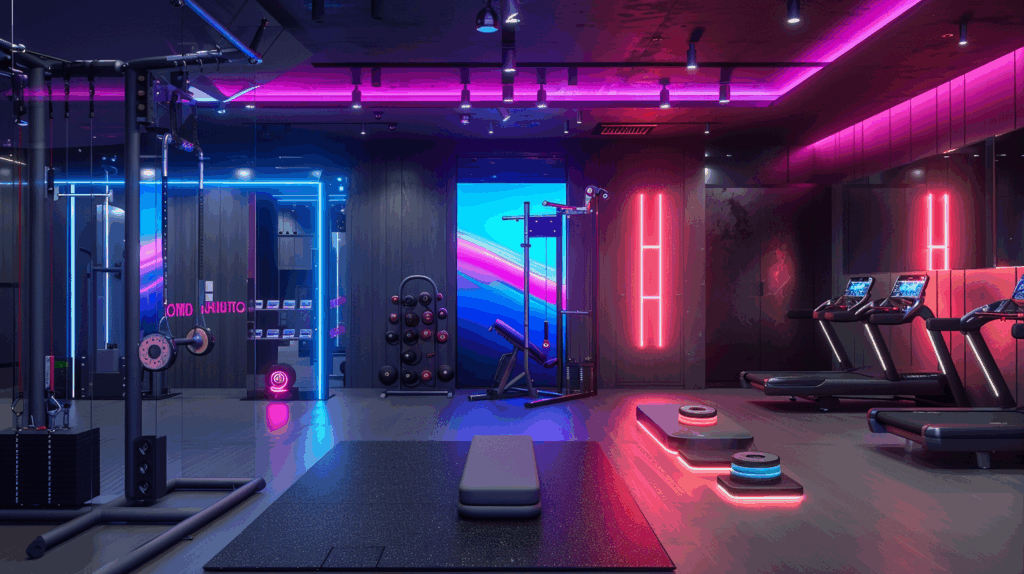
Virtual Reality Fitness: An Immersive Experience
Innovative workout experiences continue to evolve, with virtual reality (VR) fitness emerging as a key trend in 2025.
Virtual reality fitness is reshaping workouts with immersive, engaging experiences that motivate like never before.
VR workouts offer immersive environments that engage users, making exercise feel less like a chore. Technologies like the Meta Quest 3 make VR more accessible, with over 20 million users expected to engage in VR fitness by 2025.
VR platforms integrate features like biometric tracking and real-time coaching, enhancing the effectiveness of workouts.
Additionally, VR allows users to engage in dynamic activities such as jogging through virtual landscapes or competing in obstacle courses, considerably boosting motivation and enjoyment.
Wearable Technology: The Future of Personalized Fitness
As traditional fitness boundaries dissolve, wearable technology has rapidly become inseparable from the modern gym experience, transforming how individuals track, analyze, and optimize their health routines.
Advances in sensor accuracy and AI integration enable wearables—such as smartwatches, biometric apparel, and fitness trackers—to monitor detailed metrics like heart rate variability, VO2 max, blood oxygen levels, stress scores, and sleep quality in real time.
These devices provide hyper-personalized feedback and adaptive workout plans that evolve with the user’s progress, promoting optimized performance and health outcomes.
Commercial gyms increasingly integrate wearable data with AI-powered platforms to enhance member engagement, retention, and motivation through tailored experiences.
Projected to generate billions in revenue, wearable technology is not merely an accessory but a foundational element shaping the future of individualized fitness in 2025 and beyond.
Conclusion
As 2025 approaches, the fitness landscape is being reshaped by smart gym equipment that delivers real-time data and tailored workouts, virtual reality systems that immerse users in dynamic training environments, and advanced wearables offering deeply personalized health insights. These innovations not only enhance workout efficiency and engagement but also reflect a broader shift toward technology-driven, individualized fitness experiences that cater to evolving consumer expectations for convenience, customization, and results.