

Bodybuilding is undergoing a quiet revolution. No longer driven by instinct and generic programming, competitive and recreational athletes are turning to real-time data, artificial intelligence, and biometric tracking to optimize every training session and recovery window. The shift is measurable, documented, and accelerating.
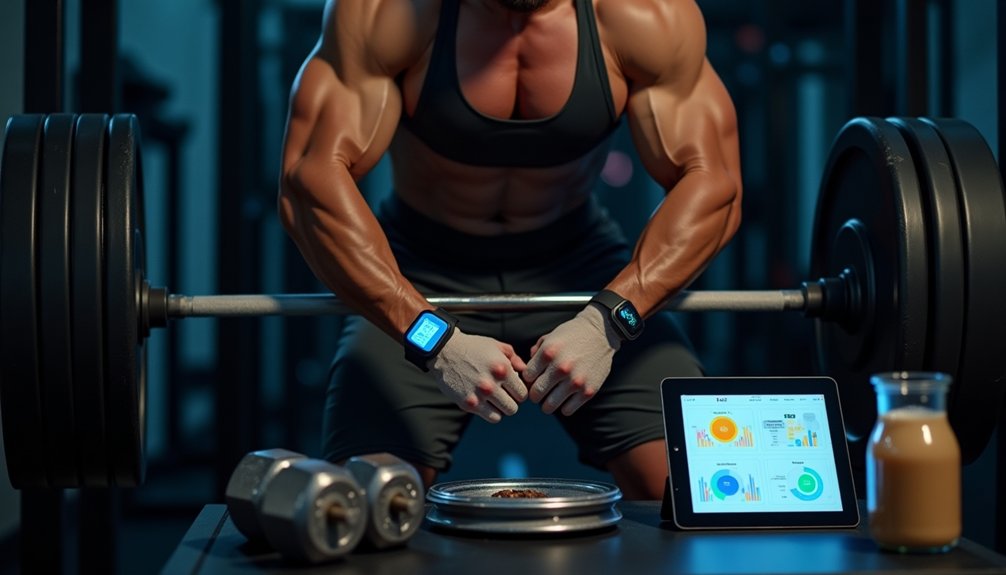
Wearable technology sits at the center of this transformation. Ranked the number one fitness trend for 2026 by an ACSM survey of 2,000 professionals, the global wearable market is projected to reach $265 billion by 2026. Seventy percent of users already apply wearable data to guide workouts and recovery decisions. Heart rate variability, sleep patterns, and readiness scores are replacing guesswork, giving bodybuilders actionable physiological feedback before they touch a barbell.
Seventy percent of wearable users already let the data decide — guesswork no longer has a place in the gym.
HRV-guided training, validated by a 2023 study, demonstrably improves performance while reducing injury rates. Exercise professionals are using biofeedback to calibrate training intensity, identify overtraining risk, and make real-time programming adjustments. Sixty-eight percent of gym members want facilities to integrate wearable data for personalized coaching, signaling that data infrastructure is now a consumer expectation, not a premium feature.

Artificial intelligence is accelerating this shift further. In bodybuilding contexts, AI moves from novelty to functional backbone, enabling adaptive programming driven by real-time physiology rather than predetermined templates. Generic prescriptions like three sets of ten are becoming obsolete.
AI adoption in fitness lead nurturing jumped from 10% to 68% in 2025 alone, and AI-driven fitness apps are positioned as among the hottest trends entering 2026. For bodybuilders, this translates to programs that adjust based on recovery data, training history, and individual response patterns.
Macro tracking has followed a similar evolution. Raw nutritional data now feeds into platforms that generate predictive insights on fatigue, muscle preservation, and periodization alignment. This precision supports the industry’s broader recalibration toward healthspan, with NASM survey data from 625 professionals confirming that client goals increasingly prioritize longevity and mobility alongside physique outcomes.
Strength programming is being redesigned around muscle preservation, functional capacity, and sustainable health. Trainers are increasingly expected to interpret wearable metrics and connect that data directly to performance outcomes, making data interpretation skills a defining competency for fitness professionals in 2026.
The business metrics reinforce adoption. LegitFit customers report an average 42% revenue growth, with top studios reaching 129%. AI automation is saving professionals over 40 hours of manual work monthly, redirecting time toward client outcomes.
Online fitness markets are growing 33.1% annually, projected to reach $59.23 billion by 2027. Data-driven bodybuilding is not an emerging experiment. It is becoming the operational standard for athletes and professionals who compete on results.