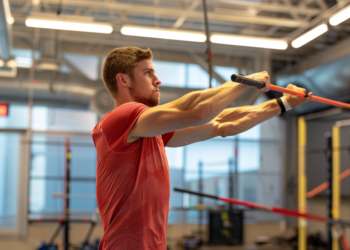



Building upper back strength is essential for overall health and injury prevention. Key exercises include resistance band movements like pull-aparts and seated rows, which effectively target critical muscles such as rhomboids and traps. Proper form, such as maintaining a straight back and engaged core during deadlifts, maximizes effectiveness and fosters muscle engagement. You can enhance progress with variations and increased resistance, keeping your workouts dynamic and challenging. Consistent training not only improves posture, but also empowers you to lift heavier and perform daily tasks with greater ease. Explore more effective strategies to elevate your training to the next level.
Key Takeaways
- Incorporate resistance band exercises like band pull-aparts and seated rows to effectively target upper back muscles.
- Focus on proper form, maintaining a straight back and engaged core during exercises for maximum effectiveness.
- Gradually increase resistance or volume to promote muscle growth and prevent training plateaus.
- Utilize variations such as grip changes or tempo modifications to challenge muscles differently and enhance strength.
- Consistently prioritize upper back workouts to improve overall strength, posture, and functional movement efficiency.
Importance of Upper Back Strength

Developing upper back strength is essential for overall physical health and functional performance. A robust upper back plays a pivotal role in posture improvement, helping to align the spine and reduce tension throughout the body.

By strengthening this area, individuals can achieve greater freedom of movement and enhanced athletic capabilities. Additionally, a strong upper back is vital for injury prevention; it stabilizes the shoulders and protects against strains and imbalances that often lead to chronic pain.
Embracing targeted training in this region not only fortifies physical resilience but also cultivates a sense of empowerment. As you commence on this journey, remember that each incremental gain contributes to a stronger, more liberated you—ready to conquer challenges and embrace life fully.
Key Exercises for Upper Back

A variety of key exercises can considerably enhance upper back strength, promoting better posture and functional movement.
Understanding upper back anatomy is essential, as it comprises muscles like the rhomboids and traps, which play critical roles in stability and mobility.
Incorporating resistance band exercises, such as band pull-aparts and seated rows, effectively targets these muscles, enabling you to build a robust upper back.
These movements not only improve muscle tone but also enhance overall performance in daily activities and athletic endeavors.
Embrace these exercises as a pathway to liberation from discomfort and weakness.
Proper Form and Techniques

Mastering proper form and techniques is essential for maximizing the effectiveness of upper back exercises.
Focusing on deadlift technique, make sure your back remains straight and your core engaged throughout the lift to prevent injury and enhance strength. Keep the barbell close to your body, pushing through your heels for peak power.
Similarly, when performing sled exercises, prioritize sled form by maintaining an upright posture, driving through your legs while keeping your core tight. This alignment fosters greater muscle engagement and functional strength.
Embrace these foundational principles to liberate your training potential, allowing you to build a powerful upper back that supports your overall fitness goals.
Consistency in form paves the way for progress and transformation.
Progression and Variations

To effectively enhance upper back strength, incorporating progression and variations into your training regimen is essential.
Upper back progression can be achieved by gradually increasing resistance, volume, or intensity in your workouts. Begin with foundational movements, such as bent-over rows, and as your strength develops, introduce advanced exercises like single-arm cable rows or barbell shrugs.
Additionally, upper back variations, such as changing grip positions or implementing tempo changes, can stimulate muscle growth and prevent plateaus. Embrace these modifications to challenge your muscles differently, fostering continuous improvement.
Incorporating Upper Back Workouts

Incorporating upper back workouts into your fitness routine is essential for achieving a well-rounded physique and enhancing overall strength. A strong upper back not only improves posture but also supports the upper back anatomy vital for various physical activities.
Resistance band exercises, such as face pulls and rows, can effectively target these muscles while allowing for controlled movements and adaptability. By integrating these workouts into your regimen, you empower yourself to lift heavier and perform daily tasks with greater ease.
Commit to consistent training that prioritizes your upper back, and experience the freedom that comes from enhanced strength and stability. Embrace the journey of building a powerful upper back, and reveal your true potential.
Frequently Asked Questions
How Often Should I Train My Upper Back for Optimal Strength?
For ideal strength, train your upper back 2-3 times weekly, allowing sufficient recovery time between sessions. This frequency balances muscle development and recovery, empowering you to achieve significant gains while minimizing the risk of injury.
Can I Do Upper Back Workouts at Home Without Equipment?
Yes, upper back workouts can be effectively performed at home using bodyweight exercises. Incorporating movements like push-ups and planks not only strengthens the back but also promotes posture improvement, enhancing overall physical liberation and confidence.
What Are the Signs of Overtraining My Upper Back?
Signs of overtraining your upper back include persistent upper back fatigue, decreased performance, and noticeable muscle imbalances. Listen to your body and allow adequate recovery to promote strength and prevent injury. Prioritize balance in your training regimen.
How Does Upper Back Strength Impact Posture and Daily Activities?
Isn’t it fascinating how upper back strength, often overlooked, can dramatically influence posture and alleviate daily fatigue? Addressing muscle imbalances fosters a liberated movement, enhancing daily activities and promoting overall well-being for a more vibrant life.
What Should I Eat to Support Upper Back Strength Training?
To support upper back strength training, prioritize protein sources like lean meats, fish, and legumes, alongside recovery foods rich in antioxidants, such as fruits and vegetables, to enhance muscle repair and overall performance during workouts.
Conclusion
In summary, the significance of upper back strength cannot be overstated, as it underpins overall athletic performance and functional movement. Incorporating targeted exercises into a training regimen not only fosters muscle symmetry but also enhances posture and injury prevention. How can one expect to excel in major lifts without a robust upper back? By prioritizing upper back workouts, athletes and fitness enthusiasts can access their full potential and achieve remarkable gains in strength and stability.